

We know better than to wait for systems built on white supremacy to save us. Our communities are powerful, our hope is defiant, and our resolution is clear. When systems fail, we rise together.
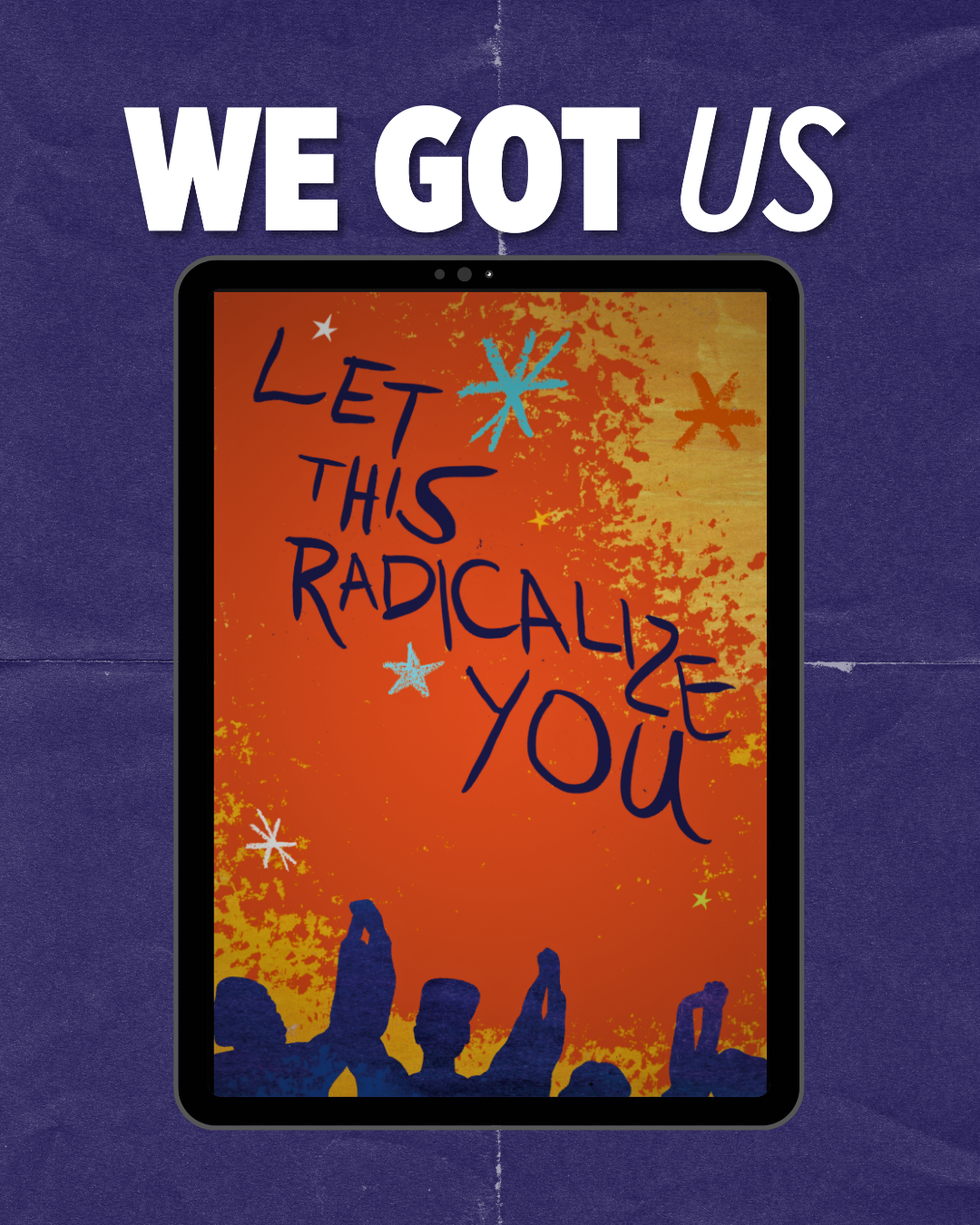
We Got Us: Stories of Faith, Justice and Collective Hope invites you to look around your neighborhood and see the stories of restoration that happen through people who follow the Jesus who took on flesh, came into our neighborhood, and is present in the current struggle. Below, Chasing Justice podcast producer Roslyn M. Hernandez shares how reading Let This Radicalize You energized and encouraged her to keep saying, “We Got Us.”
Lately, I’ve been intentionally spending less time on social media… It’s just too much! I’m keeping myself informed on important issues, but I’m trying to be more intentional about what I consume.
I have a complicated relationship with input. Learning, reading, and consuming more information have at times been a crutch in my activism. While more input can make me aware, knowledgeable, and even competent, it can also keep me from taking action.
But I’ve been returning to this: What fills us up eventually overflows out into how we live, love, and show up for one another.
That’s why I decided to listen to Let This Radicalize You, written by longtime organizers Kelly Hayes and Mariame Kaba. It didn’t feel like another download of information to feel more prepared. It didn’t create a sense of urgency. It felt like an invitation into steadiness during difficult realities. It felt like a guidebook for how to avoid burnout in justice work. It was energizing. It rooted me into the kind of hope and discipline that makes long-term solidarity possible. It was a reminder that We Got Us.
Here are four truths from the book that are filling me up right now.
1. Community Organizing Requires Relationships, Not Reactivity
Some justice messaging in the media creates a sense of fear and urgency. And while there are times when we need to respond within a timeframe, the most effective way to live into We Got Us is to cultivate relationships.
When systems failed us during the pandemic, thousands of us instinctively turned toward one another. Our shared desire to belong, rely, and help each other makes activism sustainable and grounded. Collective flourishing doesn’t depend on reactivity or virality; it depends on people choosing to stay connected.
We Got Us is not just about getting each other through one moment or issue. It’s about how we live in relationship with one another day in and day out. It’s not only about being neighbors; it’s about cultivating deep, loving friendships. Whether locally or remotely, small, manageable actions that cultivate my friendships fill me up! Maybe it’s a monthly check-in, sending notes through the mail (I so thoroughly enjoy writing and sending hand-written notes to people), or a quick, fun break; there are so many small ways to connect more.
Cultivating relationships and community is more important and effective for our justice work than living in a constant state of urgent reaction.
2. Movements Need Neighbors, Not Saviors.
White supremacy and individualistic culture often feed us narratives where a single historical figure is lauded as the hero of a movement. While the role of spokesperson exists in activism, it’s not the only role, nor is it the most impactful.
This gives me a sense of relief because sometimes I feel like I need to do more, influence more, be more. But we don’t need to “build a platform,” or become heroes. Movements have never depended on saviors. Saviorism burns people out and isolates leadership. Collective liberation and collective flourishing grow when many people keep showing up in ordinary, faithful ways. We Got Us includes everyone, not just those with platforms, titles, or visibility.
Collective liberation happens as neighbors respond to regular small invitations into relationships.
3. Mistakes Don’t Mean You Failed In Justice Work.
Some of the injustices we face have been entrenched for centuries. Others are unfolding in ways we’ve never experienced before. Also, nobody knows everything. We will inevitably make mistakes! Personal and collective growth require this.
I’ve known this intellectually, but my heart and body forget… As an eldest Latina daughter, I’m recovering from external pressures that didn’t allow me to make mistakes. Occasionally, the fear of making mistakes still stops me from reaching out, speaking up, or trying something new. I don’t think I’m alone in that.
But I have also found healing when I make mistakes in safe spaces where I am encouraged and supported. I’ve learned that not making mistakes requires stagnation and isolation. But justice work requires connection, relationality, and action. I’ve learned that there are others willing to walk with me into the new, the unknown, and the messy.
Being part of a safe community, where we know we’ll inevitably make mistakes, call each other in, and learn together has been incredibly helpful. The Chasing Justice community has been that for me. We accept that we aren’t perfect. We work together to do better. We support each other, and we grow as a community.
Mistakes are not a failure of justice work; they are evidence of engagement.
4. Emotional Integration is Necessary for Collective Liberation.
Grief. Anger. Gratitude. Joy. Exhaustion. Hope. Fear. Amusement.
We are allowed to inhabit all of it. In fact, feeling fully makes us better companions, organizers, and neighbors. When we welcome our whole emotional lives, we resist fragmentation. We honor the sacredness of our shared humanity and kinship.
Feeling and expressing our emotions is a liberating practice that reconnects us to what we love and why we keep going. Together, our emotions keep us human in the face of systems that depend on our numbness and apathy.
Some of these aren’t just feelings; they are disciplines. And they aren’t mutually exclusive. We can cultivate joy, hope, and gratitude even in the midst of grief, fear, and exhaustion. We can cry our grief while we dance and laugh. We are capable of feeling deeply and vastly.
There is space in the collective struggle to be emotionally whole.
Staying Hopeful in Long-Term Justice Work
I had a yoga instructor years ago who, as we held postures that made our muscles start to burn and shake, would tell us, “feel the ease in the effort.” I return to these instructions often, in many areas of my life. Noticing the ease takes practice; it requires focusing our awareness, not just on the pain, but also looking for the spaces where we can find ease. Sometimes it means breathing into the pain, or listening to our discomfort, respecting our limits and backing off a little, or taking a reenergizing break.
In these times, Let This Radicalize You has helped me feel not just ease, but hope, inspiration, and rejuvenation in these efforts and these trying times.So, if you feel up to it, go to your local library, independent bookstore, or library app like Libby or Hoopla. Find Let This Radicalize You in hard copy or audiobook. And may we let the words and wisdom of those who have come before us and who have been doing justice work longer encourage, energize, and sustain us.

Roslyn M Hernández creates resources for the spiritual formation and empowerment of emerging generations through her work as Project Manager at the Fuller Youth Institute and Podcast Producer at Chasing Justice. As a Contributor at Think Christian, her thought-provoking articles and conversations bridge the gap between faith and pop culture. Roslyn is also a Spiritual Director, Public Theologian, and Podcaster providing space for Indigenizing, holy listening, discernment, and healing.
The views and opinions expressed on the Chasing Justice Blog are those of the authors and do not necessarily reflect the official policy or position of Chasing Justice. Any content provided by our bloggers or authors are of their opinion and are not intended to malign any religion, ethnic group, club, organization, company, individual or anyone or anything.