

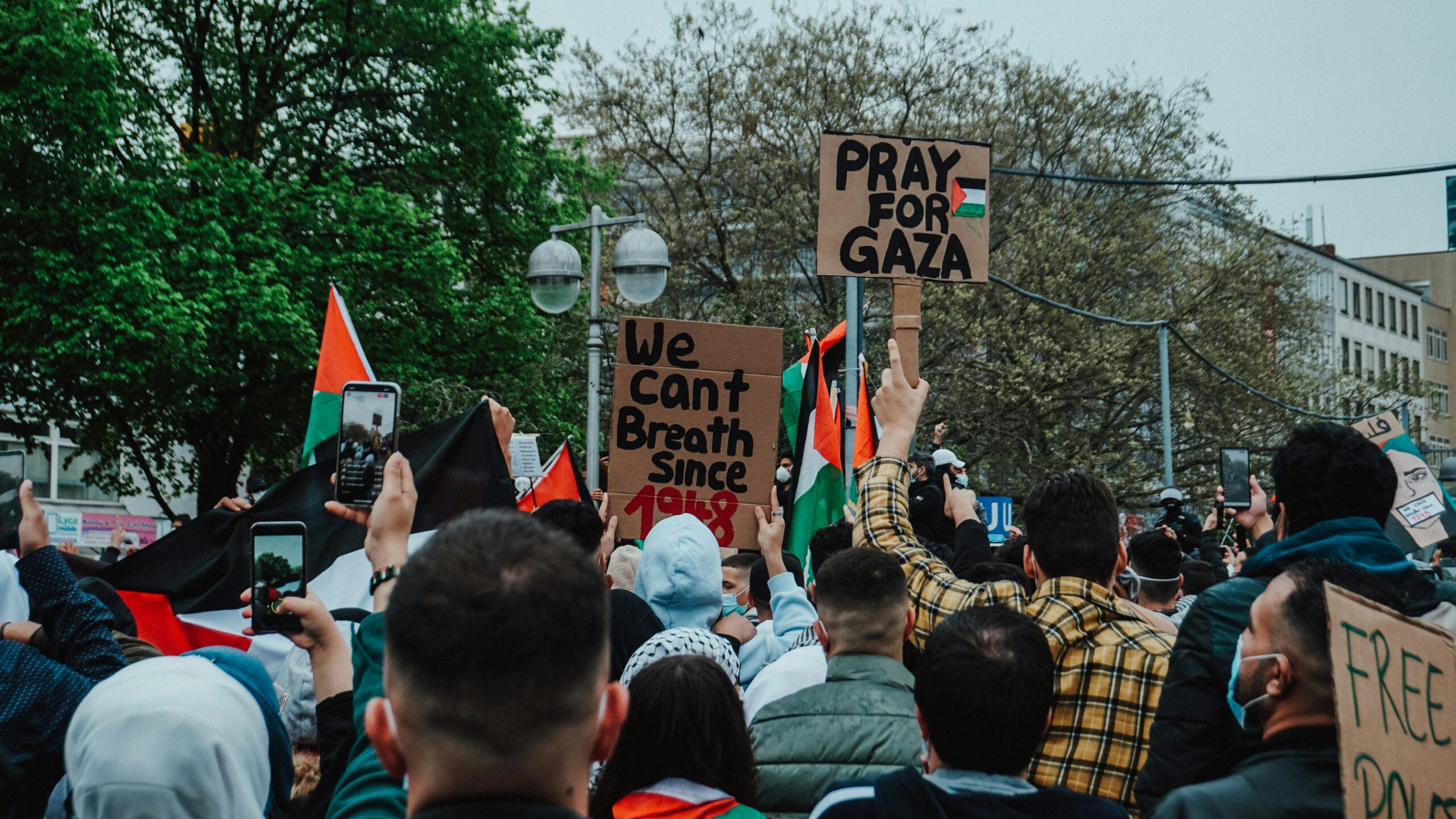

During Lent, we turn our attention to the life, death, and resurrection of Jesus. He lived in a land that was occupied by an empire, walking roads in what we now call Palestine.
Lent invites us to walk with Jesus into solidarity with the people of the land—those who are displaced, marginalized, and unheard. As we reflect on the life of Jesus, we must ask: what does our fasting lead us to do? Who does it move us toward?
This blog is actually a speech by Elom Tettey-Tamaklo at the 2025 Church at the Crossroads conference. In it, he shares his personal journey toward solidarity with Palestinians and invites us to answer Jesus’s call to stand in costly solidarity with the oppressed.
I Used To Be A Christian Zionist
7 years ago, I would have wholeheartedly believed, participated in, and lived out a dangerous theology: “According to biblical prophecy and divine mandate, Israel has the full right to all the land between the river and the sea.”
Today, here I am convinced that any theology that excludes, demonizes, and oppresses Palestinians and anyone else is no theology worth following
My name is Elom, a recent graduate of Harvard Divinity School, (pause) for better or for worse. I studied the intersection of Biblical interpretation and foreign policy, with a specific focus on Israel-Palestine. And I got in a lot of trouble for it
You see i grew up in Ghana to parents who many here will consider radical. They firmly believed in truth and justice, even if it came at a high price.
They continually emphasized the importance of welcoming the stranger, feeding the hungry, and clothing the naked – never mind that they were not even that religious. They just knew that we all could be better
But the strange thing about this is that in the backdrop of this incredibly wonderful, justice-seeking home I grew up in, was a community, like many around the world, taken hostage by violent Christian Zionist theology.
This theology that told us, Ghanaians, Africans – survivors of some of the worst horrors the world has seen—like the transatlantic slavetride, first genocide of the 20th century by the Germans against the Herero and Nama peoples of Namibia, and the ongoing colonization of Africa—that somehow, because God says so, we ought to support the settler colonial state of Israel so that our place in heaven is secure. Doesn’t sound too transactional to me, right?
What Happened When I Visited Palestine
My life has been one of beautiful contradictions or interventions, depending on how you look at it. The year was 2018. I was still staunchly Christian Zionist. I was graduating in a few months and had a job lined up in finance. Life could not have been better. By happenstance, others will call it divine intervention or mercy, I met Loui, the first Palestinian I had ever come across, who would later become my friend and a dear brother
Meeting a Palestinian scared me a little bit, I must confess. All I knew of Palestine was people who stood in direct contradiction to the will of God – or the more radical folks in my church would say direct descendants of the Philistines, yikes!
However, through lots of conversations, learning, unlearning, and a willingness to interrogate my theology, something in me started to crack.
My first time visiting Palestine was in 2019, and that was my last time entertaining the demon of Christian Zionism. You see, when you learn about the horrors and massacres that happened during the Nakba in Lifta, Safad, Saffariya, Tantura, and now you see the horror in Jenin, Nablus, and Gaza, there is no way one can look away.
Amos says:
“Woe to you who are at ease, Woe to you who put far off the day of doom, Who cause the seat of violence to come near; Who lie on beds of ivory, Stretch out on your couches, Eat lambs from the flock.” (Amos 6)
He goes on and says:
“But are not grieved for the affliction of Joseph.”
As a follower of the man who came for the poor, the destitute, those who had been afflicted and terrorized by empire, how could I not be grieved about the endless and senseless wickedness inflicted upon the people of Palestine by our governments?
The Questions That Led Me to Student Organizing
Tormented by these questions even after I came back to America, worked in finance, and then at a tech company, Amos’ words would not leave me. And in that time, I kept speaking to, learning from, and visiting Palestine
So when I came to Harvard, it was natural for me to join the long history of student organizers who have been at the frontlines of protesting our nation’s evils globally.
But this is where things take a turn: everyone here might have seen the brutal crackdown on student protestors by the institution and, eventually, the federal government.
As a movement leader, I and many others were caught in the crossfire: with spurious allegations of antisemitism and American hatred, I lost my jobs, got evicted from school housing, received multiple death threats, my face paraded on trucks around Cambridge (thankfully, they used a good picture), had the federal government call for my expulsion and eventually underwent 18 months of criminal trial.
I lift this story up not to be praised or characterized as a hero – far from that
Rather, the question I believe the spirit is asking each one of us today is what can you do, with what you have, to put a spoke in the wheel of evil?
Following The Freedom Spirit from Jim Crow to Gaza
I believe the freedom-giving spirit who led Harriet Tubman from the shackles of slavery is asking, “Is there any sacrifice too costly to prevent another Palestinian child from the Israeli-inflicted, American-funded death deal?”
Or have we become too comfortable with our lives, careers, achievements, and good name to repute?
Have we forgotten that the call of Jesus is for us to lay down our lives and pick up our cross and follow him?
Today, the voice of God echoes from Rafah, from Jabalia, from Khan Younis,
From the mothers, fathers, and children, whose lives have been ripped from them, whilst we sit and watch.
You see MLK in his letter from Birmingham jail, addressed to Christians. He was speaking about a different context, but I believe it can apply to us:
“I must confess that over the past few years I have been gravely disappointed with the white moderate. I have almost reached the regrettable conclusion that the Negro’s great stumbling block in his stride toward freedom is not the White Citizen’s Counciler or the Ku Klux Klanner, but the white moderate, who is more devoted to “order” than to justice; who prefers a negative peace which is the absence of tension to a positive peace which is the presence of justice; who constantly says: “I agree with you in the goal you seek, but I cannot agree with your methods of direct action”;
who paternalistically believes he can set the timetable for another man’s freedom; who lives by a mythical concept of time and who constantly advises the Negro to wait for a “more convenient season.” Shallow understanding from people of goodwill is more frustrating than absolute misunderstanding from people of ill will. Lukewarm acceptance is much more bewildering than outright rejection.”
Followers of Jesus of Nazareth, our task is clear: do with everything we have what we can to stop this evil. The legacy and vitality of the church rest on how we will respond to the genocide in Gaza. My generation and the generations after me are watching.
So in the words of Amos, will you sit at ease, whilst Palestine burns?
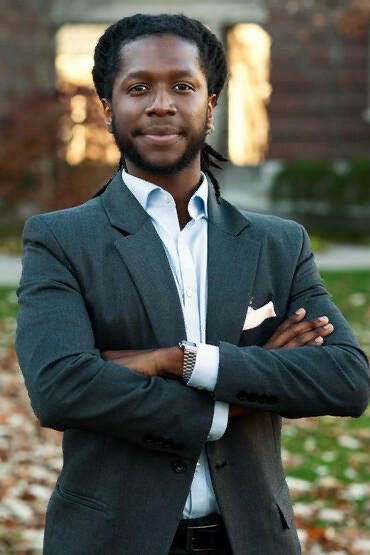
Elom Tettey-Tamaklo is a scholar, educator, and international peacebuilding practitioner whose work sits at the intersection of religion, politics, ethics, and global justice. Formed by African diasporic traditions and ecumenical Christian thought, he examines how spiritual imagination, moral courage, and collective action can shape movements for freedom and human dignity.
He holds a Master of Theological Studies degree from Harvard Divinity School, where he studied Religion, Ethics, and Politics with a certificate in Humanitarian Action, and a bachelor’s degree in Political Science from Haverford College.
You can read Elom’s writing here and hear him speak here
The views and opinions expressed on the Chasing Justice Blog are those of the authors and do not necessarily reflect the official policy or position of Chasing Justice. Any content provided by our bloggers or authors is their opinion and is not intended to malign any religion, ethnic group, club, organization, company, individual, anyone, or anything.